CloudSEK says Silent Lynx used an open-source AI agent to steal 2,000 Tajik documents
CloudSEK reported on 11 November 2026 that spy group Silent Lynx used the open-source Hermes agent to take over 2,000 documents from Tajik government systems.
By Berkant A.Published
 Tech AI Latest
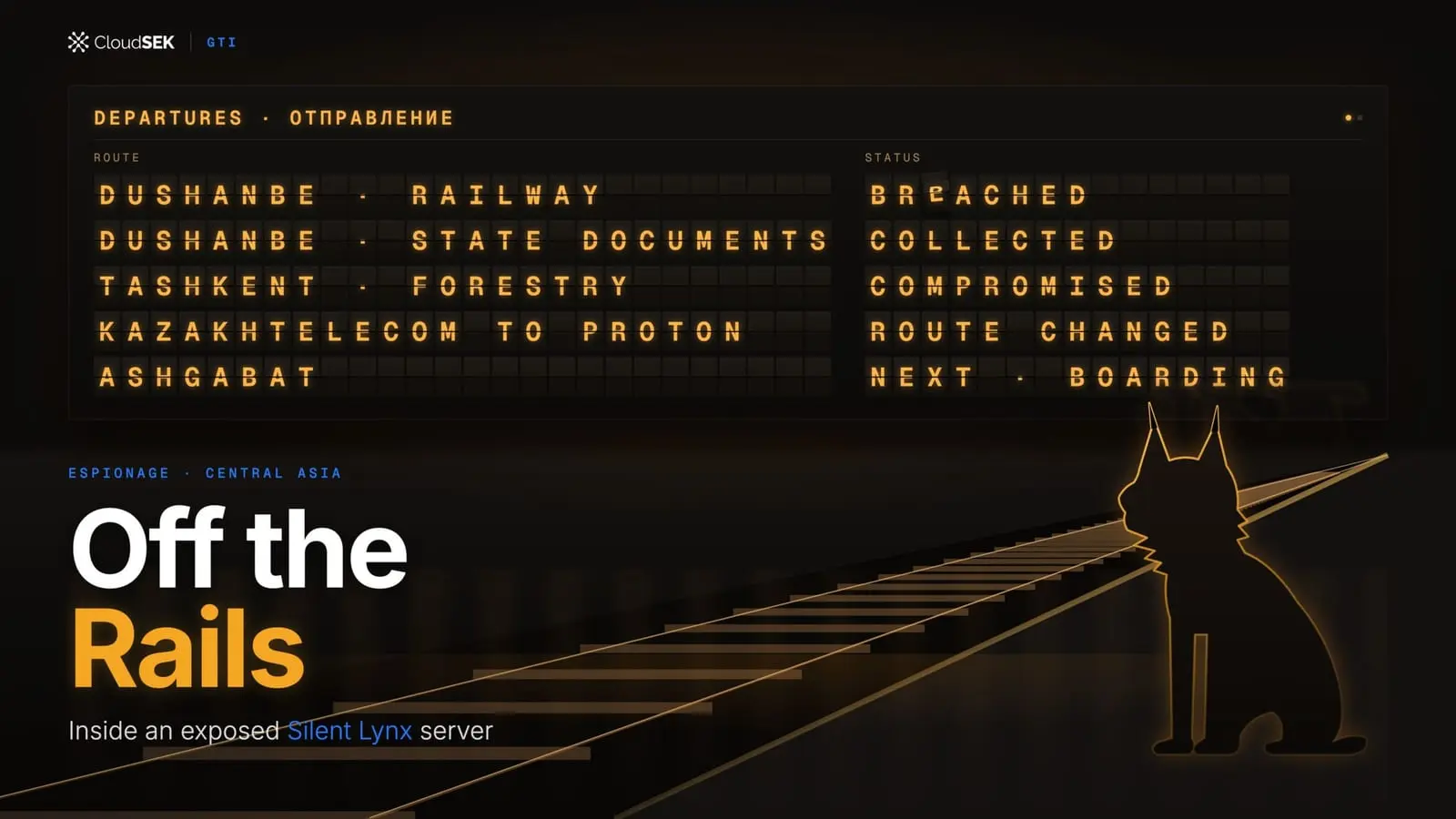
Security firm CloudSEK published research on 11 November 2026 showing that Silent Lynx, an espionage group it links to Kazakhstan with medium confidence, used Hermes, an open-source autonomous AI agent framework running mainly on DeepSeek models, to steal more than 2,000 national security related documents from Tajikistan. The evidence came from a server the operators left open to the internet, which held the agent's conversation logs.
Key facts
- Published: 11 November 2026 (CloudSEK research)
- Stolen: more than 2,000 documents linked to Tajikistan's defence ministry, CloudSEK says
- Entry: a regular user account of a Tajik state railway employee
- AI role: the Hermes agent, mainly on DeepSeek models, did reconnaissance from mid-August and wrote the program that downloaded, sorted and split the files
- Attribution: Kazakhstan link assessed with medium confidence; no finding that the Kazakh government directed it
- Not stated: how the railway account was first obtained; whether Tajik authorities confirmed the theft
What CloudSEK found
CloudSEK published research on 11 November 2026 on a server used by Silent Lynx, a cyber espionage group active in Central Asia that other vendors track as YoroTrooper and Cavalry Werewolf. The operators had left the server reachable from the internet. On it CloudSEK found stolen files, credentials and the logs of the operators' conversations with an AI agent, which let the researchers reconstruct how the intrusion was run.
According to CloudSEK, the group took more than 2,000 national security related documents from Tajikistan, linked to the country's defence ministry. The way in was an ordinary user account belonging to an employee of the Tajik state railway. Reuters, which reported the research, said Kazakh and Tajik officials did not immediately respond to requests for comment.
What the AI agent did
The operators used Hermes, an open-source framework for autonomous AI agents, and the agent ran mainly on models from DeepSeek. The logs show the agent being used for reconnaissance and analysis from around mid-August 2026, and later to help clean up logs. When the operators had located the documents they wanted, the agent wrote a custom program that downloaded the files, organised them and broke them into chunks so they could be taken out of the network more efficiently.
The best known open-source project by that name is Hermes Agent from Nous Research, an MIT-licensed agent that works with many model providers, but the coverage does not show any involvement by its developers, and nothing suggests a flaw in the framework or in DeepSeek's models. The agent was a tool in the operators' hands. What changes is the labour involved: tasks such as enumerating a network and writing bespoke exfiltration code, which used to take a skilled operator's time, were handed to a freely available agent running on a low-cost model.
Attribution and caveats
CloudSEK ties the exposed server to Silent Lynx with high confidence, but links the group to Kazakhstan only with medium confidence, citing Russian-language communications and a residential Kazakh internet connection. The report does not conclude that the Kazakh government directed the operation. The full contents and classification of the stolen documents have not been independently established, and no other security firm had published confirmation of the findings at the time of writing.
The case adds to a run of AI security reports about state-linked groups putting AI agents into live operations. In October Microsoft described Storm-0940 using ARTEX agents to reach thousands of tenants, and in September Anthropic's threat report listed misuse of Claude in cyber operations. The difference here is that the group used open-source tooling and an open model, which leaves no provider able to see or stop the activity. For defenders the practical lessons are familiar ones: protect low-privilege accounts at suppliers such as railways, watch for unusual bulk downloads and chunked transfers, and assume that reconnaissance can now run faster and around the clock.
What changed
| Before | Silent Lynx was known for phishing lures and custom implants against Central Asian government targets |
|---|---|
| After | CloudSEK says the group ran reconnaissance and data theft in Tajikistan through an open-source AI agent on DeepSeek models |
| Who it affects | Government and critical infrastructure networks in Central Asia; defenders monitoring agent-driven intrusions; open-source agent and model projects |
Questions people ask
- Who is Silent Lynx?
- A cyber espionage group active in Central Asia, also tracked as YoroTrooper and Cavalry Werewolf. CloudSEK links it to Kazakhstan with medium confidence.
- Which AI did Silent Lynx use?
- Hermes, an open-source autonomous agent framework, running mainly on DeepSeek models, according to CloudSEK's analysis of the group's exposed server.
- What was stolen?
- More than 2,000 national security related documents from Tajikistan linked to its defence ministry, CloudSEK says. Their exact contents have not been independently verified.
Sources
- Off the Rails: Inside an Exposed Silent Lynx Server (CloudSEK, 11 Nov 2026)
- Kazakhstan-linked hackers used AI agent to spy on Central Asian governments (The Record, 11 Nov 2026)
- Kazakhstan-linked hackers used AI to steal Tajik government documents, researchers say (Reuters) (Reuters via SRN News, 11 Nov 2026)
- Cyber Espionage Group Silent Lynx Compromises Tajikistan Railway, Collects Thousands of Defence Documents (The IT Nerd, 11 Nov 2026)
Reference pages
Spotted an error? See the corrections policy and tell the editor. Facts in this story come from the sources listed above; vendor claims are attributed.
Comments
Loading comments.