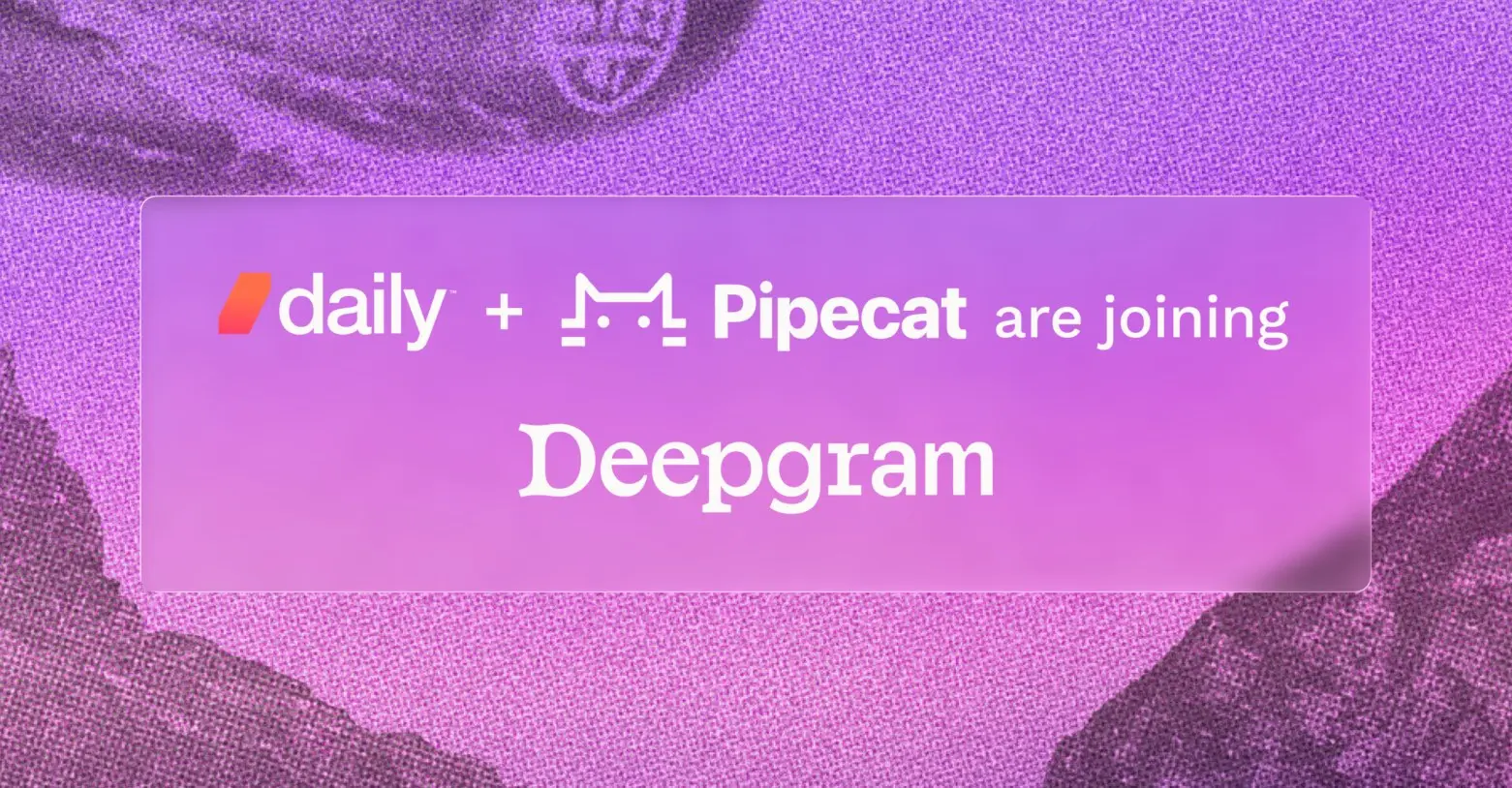
Deepgram acquires Daily, maker of Pipecat, and moves the voice agent framework to a foundation
Deepgram is acquiring Daily, creator of the open-source Pipecat voice agent framework, which stays BSD licensed under a new independent Pipecat Foundation.
By Berkant A.Published
 Tech AI Latest
Deepgram announced on 29 October 2026 that it is acquiring Daily, the real-time audio and video company that created Pipecat, an open-source framework for voice agents. Pipecat stays free under its BSD licence and moves to an independent Pipecat Foundation. Deepgram will build its new Voice Agent Platform on Pipecat and Daily's network, and introduced the Real-Time Context Standard. The price was not disclosed.
Key facts
- Announced: 29 October 2026 (Deepgram press release and Daily blog)
- Deal: Deepgram is acquiring Daily; the Daily team joins Deepgram; price not disclosed
- Pipecat: stays open source under its existing BSD licence; an independent Pipecat Foundation is being set up
- Scale claimed by Daily: more than 200 integrations, almost 400 contributors, 75 network points of presence
- Also announced: the Real-Time Context Standard (RCS), an open protocol co-developed with the Pipecat team
- Voice Agent Platform availability and pricing: not stated in the announcement
What Deepgram and Daily announced
Deepgram said on 29 October 2026 that it is acquiring Daily, creator of Pipecat, which Deepgram calls the most popular open-source voice agent framework. Daily also runs a global real-time network that connects users to voice agents. Deepgram says Pipecat and Daily will underpin its new Voice Agent Platform alongside its own speech models. The Daily team joins Deepgram, and cofounder Kwindla Hultman Kramer becomes Head of Open Source. Neither company disclosed the price.
Pipecat stays fully open source and free under its existing BSD licence. In Daily's own post, Kramer says an independent Pipecat Foundation will be run by a steering committee that includes companies competing with Deepgram, and that Deepgram will sell, support and develop all of Daily's current products.
What Pipecat does and what RCS adds
Pipecat is the layer that wires speech-to-text, language and text-to-speech models together in real time. Daily lists the problems it handles: switching models, low-latency transport, streaming between models, turn detection, interruptions, context management and async tool calls. Daily says it has more than 200 integrations and almost 400 contributors, and that eighteen engineers built it.
At its Speak event, Deepgram also introduced the Real-Time Context Standard, an open protocol co-developed with the Pipecat team. RCS defines three kinds of metadata: context from the audio, such as a whisper or an unclear word; instructions for how a language model should use those signals; and guidance on how the reply should sound. Adapters translate the signals for each model provider.
Why it matters
A speech model vendor now owns the most widely used neutral framework in its own market, which is why the foundation matters. Developers who mix models from Deepgram rivals such as ElevenLabs will judge the deal by whether the steering committee has real control over the roadmap. For Deepgram, owning orchestration and transport makes it a full-stack voice platform rather than an API that other frameworks call. More voice and agent coverage is collected under AI Agents.
What to watch next
The foundation's charter, members and first steering committee are not named yet. Deepgram's Chief Product Officer Ed Anuff previewed the Voice Agent Platform and two new conversation models at Speak, and Deepgram says full details and availability will follow on its blog. Whether other model makers adopt RCS will decide if it becomes a standard.
What changed
| Before | Pipecat was maintained by Daily, an independent infrastructure company, and Deepgram supplied models that Pipecat could call |
|---|---|
| After | Deepgram owns Daily and builds its Voice Agent Platform on Pipecat, while Pipecat moves to an independent foundation under a BSD licence |
| Who it affects | Developers building voice agents on Pipecat, Daily's infrastructure customers and voice model providers that integrate with Pipecat |
Questions people ask
- Will Pipecat stay open source?
- Yes. Deepgram says Pipecat remains fully open source and free under its existing BSD licence, and an independent Pipecat Foundation is being set up.
- How much did Deepgram pay for Daily?
- The price was not disclosed in either company's announcement.
- What is the Real-Time Context Standard?
- An open protocol from Deepgram, co-developed with the Pipecat team, that carries audio context such as tone or whispering, instructions for the language model and guidance on how the reply should sound.
Sources
- Deepgram is acquiring Daily, makers of Pipecat, to offer the first complete, production-ready, open stack for conversational voice AI (Deepgram, 29 Oct 2026)
- Deepgram Is Acquiring Daily and Establishing an Independent Pipecat Foundation (Daily, 29 Oct 2026)
- Deepgram acquires Pipecat-maker Daily to bolster its voice AI infrastructure (TechCrunch, 29 Oct 2026)
Reference pages
Spotted an error? See the corrections policy and tell the editor. Facts in this story come from the sources listed above; vendor claims are attributed.
Comments
Loading comments.