Dream launches with $17M seed from a16z to build AI world models for buildings
Dream, founded by former Palantir leaders, emerged from stealth on 29 October 2026 with $17M in seed funding including a16z to automate building design.
By Emre A.Published
 Tech AI Latest
Dream, a San Francisco startup founded by former Palantir leaders Andy Elder and Arjun Mathur, emerged from stealth on 29 October 2026 with $17 million in seed funding from Andreessen Horowitz, SV Angel, XYZ, Zigg Capital and others. It builds what it calls built world models, trained on more than 100 million square feet of permitted U.S. buildings, to produce construction drawing sets. Dream says it is architect of record on 10 projects in California and Texas.
Key facts
- Announced: 29 October 2026, Dream press release via Business Wire
- Funding: $17 million seed; investors include Andreessen Horowitz (a16z), SV Angel, XYZ and Zigg Capital
- Training data: more than 100 million square feet of real, permitted U.S. buildings, according to Dream
- Deployment: architect of record on 10 projects in California and Texas; $20 million in project developments supported
- Founders: Andy Elder and Arjun Mathur, both formerly at Palantir
- Not stated by the company: valuation, round lead, pricing, model size
What Dream announced
Dream said in a press release on 29 October 2026 that it had emerged from stealth with $17 million in seed funding. The round included Andreessen Horowitz (a16z), SV Angel, XYZ and Zigg Capital, among others. The release does not name a lead investor or a valuation; TechCrunch reported that a16z led the round.
The company is based in San Francisco and was founded by Andy Elder and Arjun Mathur. Elder was Palantir's global head of product design and Mathur rose to senior vice president and head of its global commercial business, according to Dream's company page.
What a built world model is
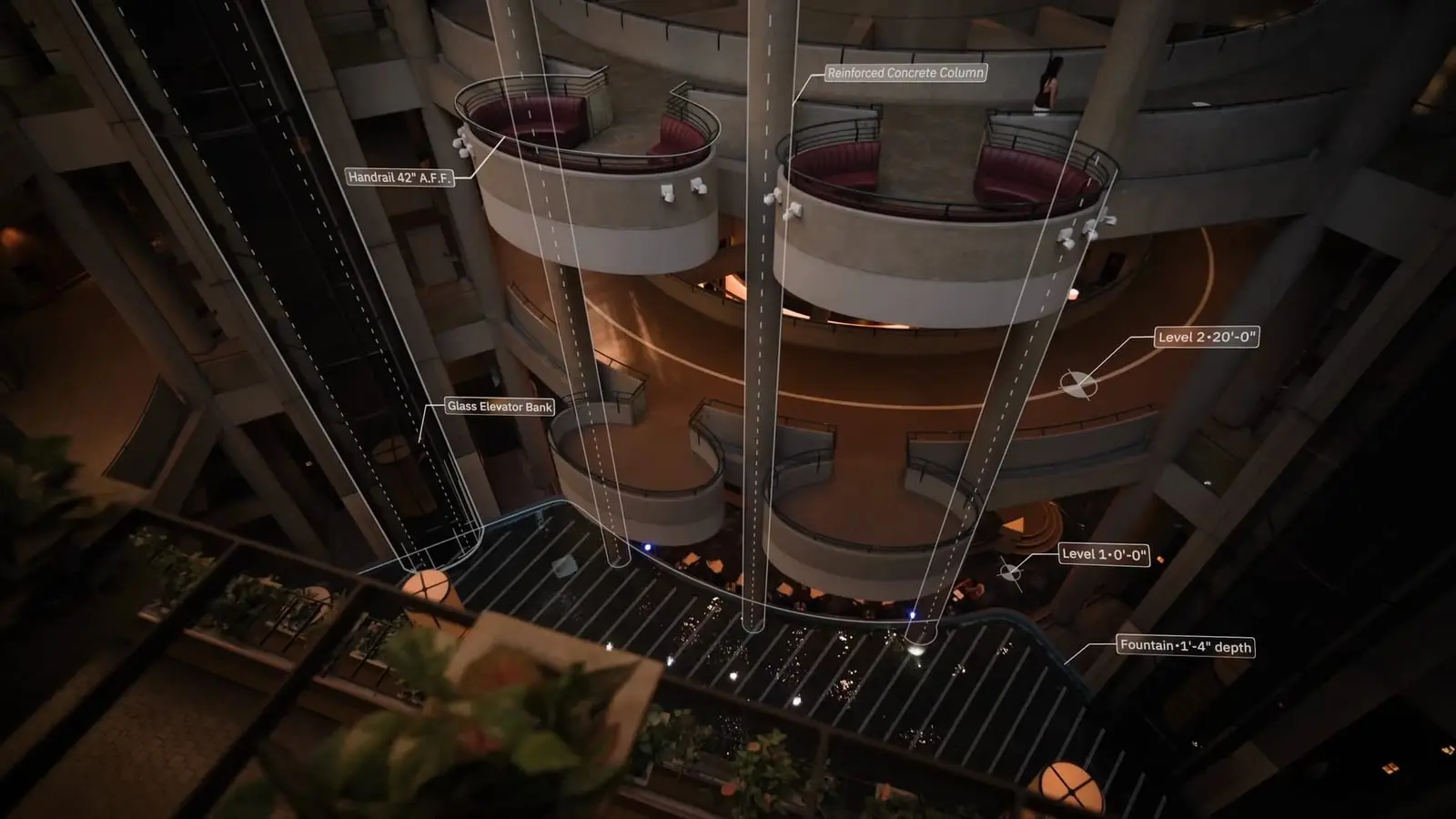
Dream calls its product built world models: AI trained to reason about physical, constructed space, its geometry, its constraints and how objects relate to the spaces that contain them. It calls the capability structural cognition, meaning the model accounts for how beams, ductwork, wiring, HVAC and electrical systems fit together. Dream says it trained on more than 100 million square feet of real, permitted U.S. buildings, covering commercial properties, apartments and single-family homes.
The output, the company says, is a drawing set a general contractor can build from, not a rendering, with options checked against code. Its first focus is commercial work such as storefronts, offices and data centers. Co-founder Andy Elder says a hallucination in a building is a structural fault, which is why the company stresses exact geometry.
Why it matters
Most AI world models so far target video, games or robot training, such as Genie 4 and NVIDIA Cosmos. Dream applies the term to building design, where errors carry legal and safety weight. It already works as architect of record on 10 projects in California and Texas, one of them a single-family home in Austin completed from start to finish, and says it has supported $20 million in project developments. Those are company figures with no independent review yet. Kimberly Tan, investing partner at a16z, says the firm backed Dream because it believes spatial reasoning will change how the physical world is designed and built. More sector stories are in AI in Industry.
What to watch next
Open questions include how permit authorities treat AI-produced drawing sets, who carries professional liability, and how the models handle local codes outside California and Texas. Dream has not published pricing, benchmarks or a technical paper. Its co-founder Arjun Mathur says the approach could later extend to other 3D design work beyond buildings.
What changed
| Before | Dream operated in stealth with no public product or funding |
|---|---|
| After | Dream is public with $17 million in seed funding and says it is architect of record on 10 projects using its built world models |
| Who it affects | Architects, structural and MEP engineers, developers and general contractors in commercial construction |
Questions people ask
- How much did Dream raise?
- $17 million in seed funding, announced on 29 October 2026, with Andreessen Horowitz, SV Angel, XYZ and Zigg Capital among the investors, according to Dream's press release.
- What does Dream's AI produce?
- Dream says its models produce construction drawing sets covering layout, structure and building systems such as plumbing and HVAC, checked against code, that a general contractor can build from.
- Who founded Dream?
- Andy Elder and Arjun Mathur, Stanford computer science graduates who each spent about a decade at Palantir.
Sources
- Dream Raises $17M in Seed to Teach AI How to Understand and Build the Physical World (Dream (Business Wire), 29 Oct 2026)
- Dream: Company and founding team (Dream, 29 Oct 2026)
- Ex-Palantir execs launch Dream with $17M from a16z to build AI world models for construction (TechCrunch, 29 Oct 2026)
Reference pages
- Dream company
Spotted an error? See the corrections policy and tell the editor. Facts in this story come from the sources listed above; vendor claims are attributed.
Comments
Loading comments.