Liquid AI releases LFM3, six open 2B-class models for text, vision, audio and agents on devices
Liquid AI released LFM3 on 27 October 2026: six open-weight models of about 2B parameters for text, vision, audio and omni tasks that run on phones and laptops.
By Emre AlemdarPublished
 Tech AI Latest
Liquid AI released LFM3 on 27 October 2026, a new generation of its Liquid Foundation Models. The first release has six open-weight models of about 2B parameters covering text, vision, audio, omni and decision tasks, all built on one LFM3-1.7B-Base backbone trained on 22T tokens. The text model has a 256K-token context and fits in about 1 GB at 4-bit precision. Commercial use is free for organisations under $10 million in annual revenue.
Key facts
- Announced: 27 October 2026 (Liquid AI blog)
- Six models of about 2B parameters: text, vision, audio, omni and two decision models
- Text model LFM3-1.7B: 256K-token context, about 1 GB at 4-bit precision
- Pre-training: 22T tokens on a new convolution and attention hybrid architecture
- License: LFM Open License v1.0; commercial use limited to organisations under $10M revenue
- API price: not stated in the announcement
What Liquid AI released
Liquid AI announced LFM3 on 27 October 2026 in a blog post. The release covers six models of about 2 billion parameters, all branched from LFM3-1.7B-Base: a text model, a vision model, an audio model, an omni model, and two decision models built from the vision and omni versions. The base and post-trained weights are on Hugging Face, and the models are also offered in Liquid AI's playground and API.
The text model, LFM3-1.7B, has a 256K-token context window and fits in about 1 GB at 4-bit precision, according to the company. LFM3-VL-2B accepts video for the first time in an LFM vision model. LFM3-Audio-2B takes text or speech and answers in text, speech or both across 18 languages. LFM3-Omni-2B combines vision, audio and language in one model.
Architecture and benchmarks
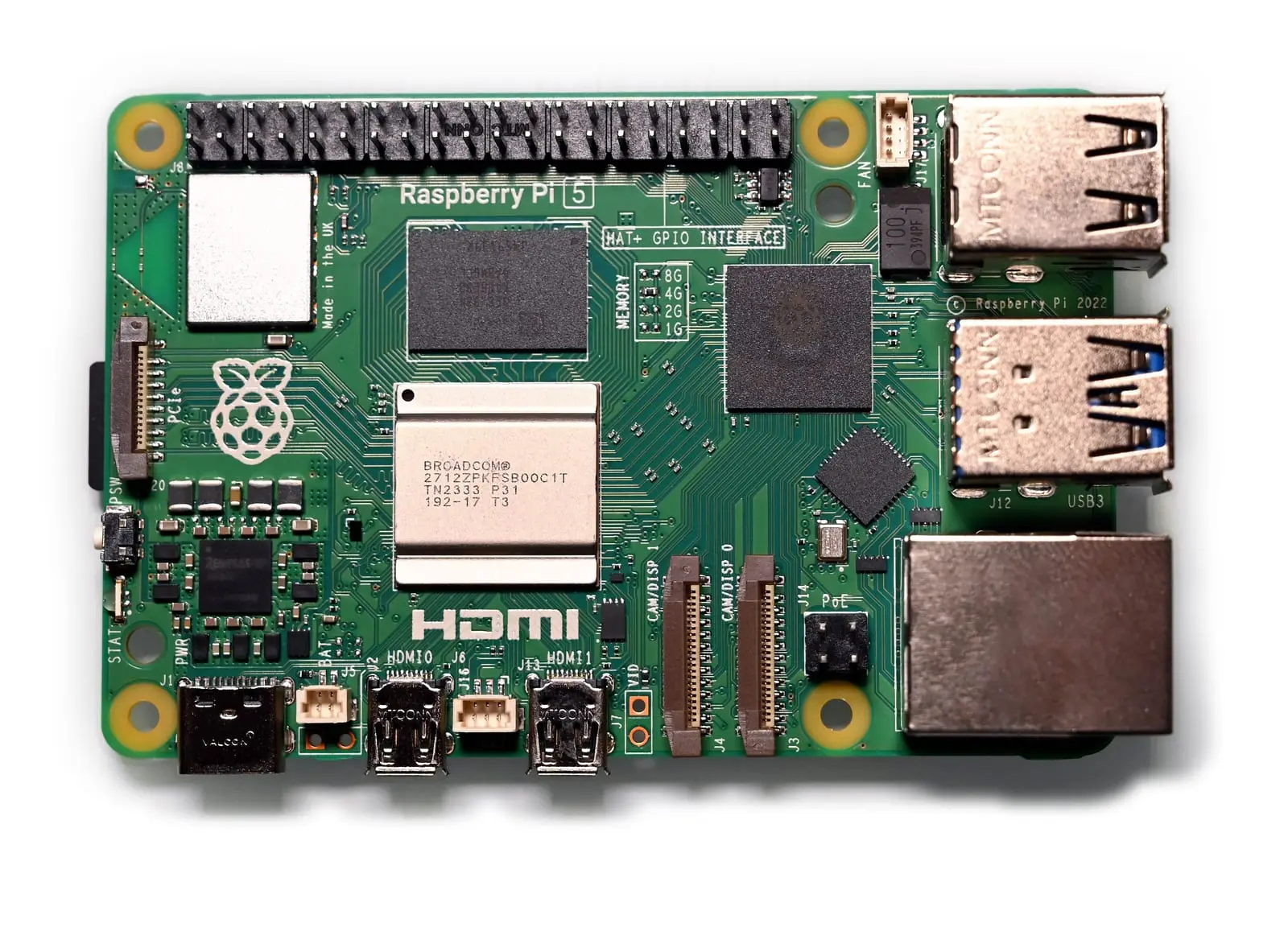
Liquid AI says it redesigned its architecture with a hardware-in-the-loop search across 14 device and backend combinations, including a Raspberry Pi 5, Samsung and OnePlus phones, Apple and AMD laptops and the Qualcomm Hexagon NPU. Of the 24 layers, 13 are gated short convolutions, 5 use sliding-window attention and 6 use global attention. Pre-training used 22T tokens, with the last 3.5T tokens on curated data that includes agent traces and tool calls.
On the company's own tables, LFM3-1.7B scores 71.39 on BFCL V4 and 38.42 on WebArena-Verified, ahead of Qwen3.5-9B on both. It scores 43.40 on SWE-bench Verified against 51.20 for Qwen3.5-9B, and 63.37 on GPQA Diamond against 80.40. Liquid AI says LFM3-1.7B beats its previous LFM2.5-2.6B with 35% fewer parameters. These are vendor results.
What the license allows
LFM3 ships under the LFM Open License v1.0, not a standard open source license. The license grants free use, modification and redistribution, but commercial use is conditioned on the user's organisation staying below a threshold of $10 million in annual revenue. Larger companies need a separate agreement, and the terms for that are not stated in the announcement. This sits between fully permissive releases such as NVIDIA's Nemotron 3.5 Bolt and research-only licenses.
For developers, the practical point is size. A 1.7B model with a 256K context and tool calling targets agents that run on a phone or laptop without a cloud API. Liquid AI quotes launch partners AMD, Ambarella, Qualcomm and Mercedes-Benz, which says it is exploring on-device AI for its MBUX Virtual Assistant.
What to watch next
Liquid AI calls this the first LFM3 release and says it covers the 2B range, so larger LFM3 models are a likely next step, though no dates are given. Independent evaluations of the agent benchmarks, and how the models run in llama.cpp and other runtimes on real phones, will show whether the efficiency claims hold. More releases are listed under Open Source AI and on the model release tracker.
What changed
| Before | Liquid AI's edge models were the LFM2 and LFM2.5 families, with separate text, vision and audio lines |
|---|---|
| After | LFM3: six open 2B-class models on one backbone, 256K context for text, video input for vision, 18 languages for audio |
| Who it affects | Developers building on-device agents and assistants; device makers; small companies under the $10M revenue threshold |
Questions people ask
- Is LFM3 free for commercial use?
- Only for organisations with annual revenue under $10 million, under the LFM Open License v1.0. Larger organisations need a separate agreement with Liquid AI.
- How large are the LFM3 models?
- About 2B parameters each. The text model has 1.7B parameters and Liquid AI says it fits in about 1 GB at 4-bit precision.
- Where can LFM3 be downloaded?
- The weights are on Hugging Face in the LiquidAI LFM3 collection, and the models can also be used in Liquid AI's playground and API.
Sources
- Introducing LFM3: Every Modality for Specialized Intelligence (Liquid AI, 27 Oct 2026)
- LFM3-1.7B model card (Liquid AI on Hugging Face, 27 Oct 2026)
- LFM Open License v1.0 (Liquid AI, 27 Oct 2026)
Reference pages
Spotted an error? See the corrections policy and tell the editor. Facts in this story come from the sources listed above; vendor claims are attributed.
Comments
Loading comments.