How much is Big Tech spending on AI infrastructure? NVIDIA's quarter and 2026 capex compared
NVIDIA's $115.8 billion quarter set against the 2026 capex plans of Amazon, Microsoft, Meta and Alphabet, the suppliers behind them, and how the build is paid for.
By Emre A.Published
 Tech AI Latest
NVIDIA sold $107.6 billion of data center products in the quarter to 25 October 2026. In their latest quarters Alphabet, Microsoft and Meta together spent about $125.7 billion on capital projects, and Amazon, Microsoft and Meta plan roughly $525 billion to $535 billion for 2026. The money flows on to memory, networking and power suppliers, and it is increasingly financed with debt, equity sales and vendor investment rather than cash flow alone.
Key facts
- NVIDIA Q3 fiscal 2027: $115.8 billion revenue, $107.6 billion Data Center, Q4 outlook $130.0 billion (NVIDIA)
- Latest quarterly capex: Alphabet $51.4 billion, Microsoft $39.4 billion, Meta $34.9 billion (company filings)
- 2026 plans: Amazon about $220 billion, Microsoft about $170 billion, Meta $135 billion to $145 billion
- Free cash flow turned negative at Alphabet (minus $9.1 billion) and Meta (minus $2.1 billion) in the third quarter
- Federal Reserve: advanced computing debt issuance reached $680 billion by October 2026
- Not comparable one to one: capex also pays for buildings, land and power, and NVIDIA sells to many buyers beyond these four
The short answer
On 17 November 2026 NVIDIA reported revenue of $115.8 billion for the three months to 25 October, of which $107.6 billion came from its Data Center segment. It guided to $130.0 billion for the next quarter. Multiply that outlook by four and NVIDIA's revenue is running at about $520 billion a year. That is site arithmetic, not a company forecast, and the next quarter includes an extra week, but it gives a sense of scale.
On the buying side, the three largest US cloud and platform companies that give annual figures plan to spend roughly $525 billion to $535 billion on capital projects in 2026: about $220 billion at Amazon, about $170 billion at Microsoft for the calendar year and $135 billion to $145 billion at Meta, according to their October results as reported by CNBC. Alphabet did not state an annual figure in its results release.
These two totals are not the same money. Capital spending pays for land, buildings, power equipment and cooling as well as chips, and NVIDIA also sells to Oracle, AI labs, smaller cloud providers and governments. But the comparison shows how concentrated the AI build has become: a handful of buyers and one dominant chip seller set the pace for the whole supply chain. This explainer puts the latest numbers side by side, using figures already reported on this site from company filings.
What the buyers spent last quarter
Alphabet reported capital expenditure of $51.4 billion for the quarter to 30 September, more than its operating cash flow, which left free cash flow at minus $9.1 billion. Google Cloud revenue rose 103% to $30.7 billion in the same quarter, helped by AI infrastructure and TPU system sales, as covered in Alphabet's third quarter results. Part of Alphabet's spending goes to its own TPU chips rather than to NVIDIA.
Microsoft recorded $39.4 billion of additions to property and equipment in the quarter to 30 September, roughly double a year earlier, in its first quarter of fiscal 2027. Figures that include finance leases are higher. Its commercial contracted backlog rose 73% to $677 billion, which is the clearest sign of why it keeps building. Microsoft trimmed its calendar 2026 capex figure to about $170 billion from about $175 billion, according to CNBC, and some of its capacity depends on partners: IREN pushed back revenue targets at its Childress campus after a networking change Microsoft requested.
Meta spent $34.91 billion in the quarter and narrowed its 2026 range to $135 billion to $145 billion, with free cash flow of minus $2.12 billion, as reported in Meta's third quarter results. Meta also signed an expanded partnership with AMD for Helios racks and a custom Instinct GPU, so not all of its accelerator budget goes to NVIDIA.
Added together, Alphabet, Microsoft and Meta spent about $125.7 billion on capital projects in quarters ending 30 September. NVIDIA's Data Center revenue of $107.6 billion covers a quarter ending almost four weeks later and includes sales to many other customers, so the figures overlap rather than match. Amazon's quarterly figure is not part of this site's coverage and is left out of the sum.
Where the money goes after NVIDIA
NVIDIA is the largest single recipient, but the build pulls a long chain of suppliers with it. Broadcom, which designs custom accelerators and networking chips for cloud companies, reported AI semiconductor revenue of $16.7 billion for the quarter to 2 August, up 221%, and guided to $21.7 billion for the following quarter. That money mostly comes from the same hyperscalers building their own chips as an alternative to NVIDIA GPUs.
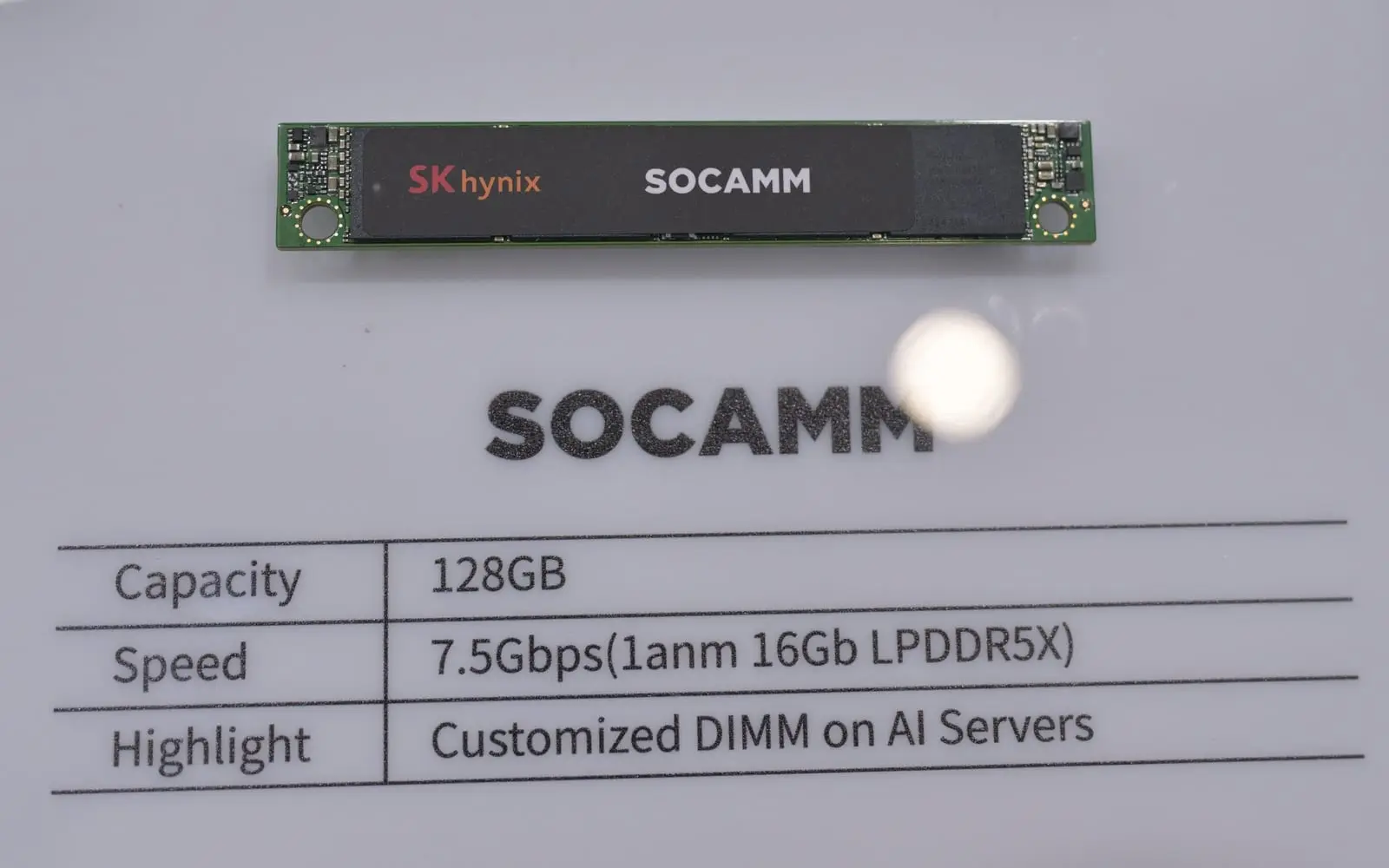
Memory is the tightest link. SK hynix reported record third quarter revenue of 104.6 trillion won with an operating margin of 80%, and said long-term agreements with 14 major customers cover more than half of its 2027 and 2028 capacity. It expects memory shortages to last through 2030. For buyers that means memory, not only GPUs, sets how fast new clusters can be delivered and what they cost.
Power and cooling come next. Vertiv, which supplies both to data centers, said organic orders more than doubled in its third quarter and raised its 2026 sales guidance by $650 million. NVIDIA itself is paying suppliers in advance: in October it committed capacity reservation advances, including $1.1 billion to KYEC, to lift substrate capacity 2.5x over three years and double testing capacity from 2026 to 2027.
How the build is being paid for
For most of the AI boom the largest companies paid for data centers out of operating cash flow. That is changing. Alphabet and Meta both reported negative free cash flow in the third quarter. Meta priced a $25.0 billion common stock offering and about $12.5 billion of mandatory convertible preferred in October, and NVIDIA said it would invest $3 billion in that offering, with AMD adding $1 billion. The chip seller is helping fund one of its biggest buyers.
Smaller builders lean harder on debt. AI cloud provider Nscale disclosed in its IPO filing a net loss of $1.69 billion for nine months and debt of about $5.5 billion, and warned it needs more financing for its 2027 commitments. TeraWulf's Kentucky campus for Anthropic is backed by Google credit support for its construction debt. Anthropic's amended S-1 shows a $34.9 billion compute agreement with Lambda became terminable when Lambda missed a lease deadline.
Regulators have noticed. The Federal Reserve's Financial Stability Report of 13 November found that 87% of surveyed market contacts named AI as a risk, citing valuations, cyberattacks and complex data center financing, and put advanced computing debt issuance at $680 billion by October. None of this means the spending will stop, but it does mean the cost of capital now matters for how fast it grows.
What to watch
Four signals will show whether the pace holds into 2027. First, NVIDIA's fourth quarter against its $130.0 billion outlook, which assumes no China data center compute revenue after the US remote access rule for AI chips. Second, the 2027 capex guidance the hyperscalers give with their January and February results; Meta has already said it will keep investing aggressively in AI in 2027. Third, whether new entrants add demand outside the big four, such as SpaceX's planned $74 billion supercomputing campuses. Fourth, financing terms for the smaller cloud providers that sit between the chip sellers and the AI labs.
This capacity is ultimately sold as tokens, and the model release tracker lists the API price per million tokens of the models running on it. The AI chips and data centers section tracks new campus, chip and supply announcements as they are made.
Questions people ask
- How much are Amazon, Microsoft and Meta spending on capital projects in 2026?
- About $220 billion at Amazon, about $170 billion at Microsoft for calendar 2026 and $135 billion to $145 billion at Meta, according to their October results as reported by CNBC. Together that is roughly $525 billion to $535 billion.
- How much did NVIDIA earn from data centers last quarter?
- NVIDIA reported Data Center revenue of $107.6 billion for the quarter ended 25 October 2026, out of total revenue of $115.8 billion, and guided to $130.0 billion of total revenue for the next quarter.
- Is all hyperscaler capex spent on NVIDIA chips?
- No. Capex also covers land, buildings, power and cooling, and companies buy custom chips such as Google TPUs, Broadcom designs and AMD Instinct GPUs. NVIDIA also sells to many buyers beyond the big cloud companies.
- How is AI data center construction financed?
- Increasingly with outside capital as well as cash flow: Meta sold stock and preferred shares, smaller cloud providers such as Nscale took on debt, and the Federal Reserve put advanced computing debt issuance at $680 billion by October 2026.
Sources
- NVIDIA Announces Financial Results for Third Quarter Fiscal 2027 (NVIDIA, 17 Nov 2026)
- Nvidia's Kress tells CNBC's Jim Cramer that 'customers continue to be with us' (CNBC, 17 Nov 2026)
- Alphabet Announces Third Quarter 2026 Results (Alphabet Inc. (SEC Form 8-K, Exhibit 99.1), 28 Oct 2026)
- Microsoft Announces First Quarter Results (Microsoft Corp. (SEC Form 8-K, Exhibit 99.1), 28 Oct 2026)
- Meta Reports Third Quarter 2026 Results (Meta Platforms Investor Relations, 21 Oct 2026)
Reference pages
Spotted an error? See the corrections policy and tell the editor. Facts in this story come from the sources listed above; vendor claims are attributed.
Comments
Loading comments.