Google adds TPU 8tx for confidential inference and dual-chip TPU 8i Max for long context
Google announced TPU 8tx, a confidential inference system with AMD EPYC hosts, and TPU 8i Max, two TPU 8i chips in one package, on 9 November 2026.
By Gürkan E.Published
 Tech AI Latest
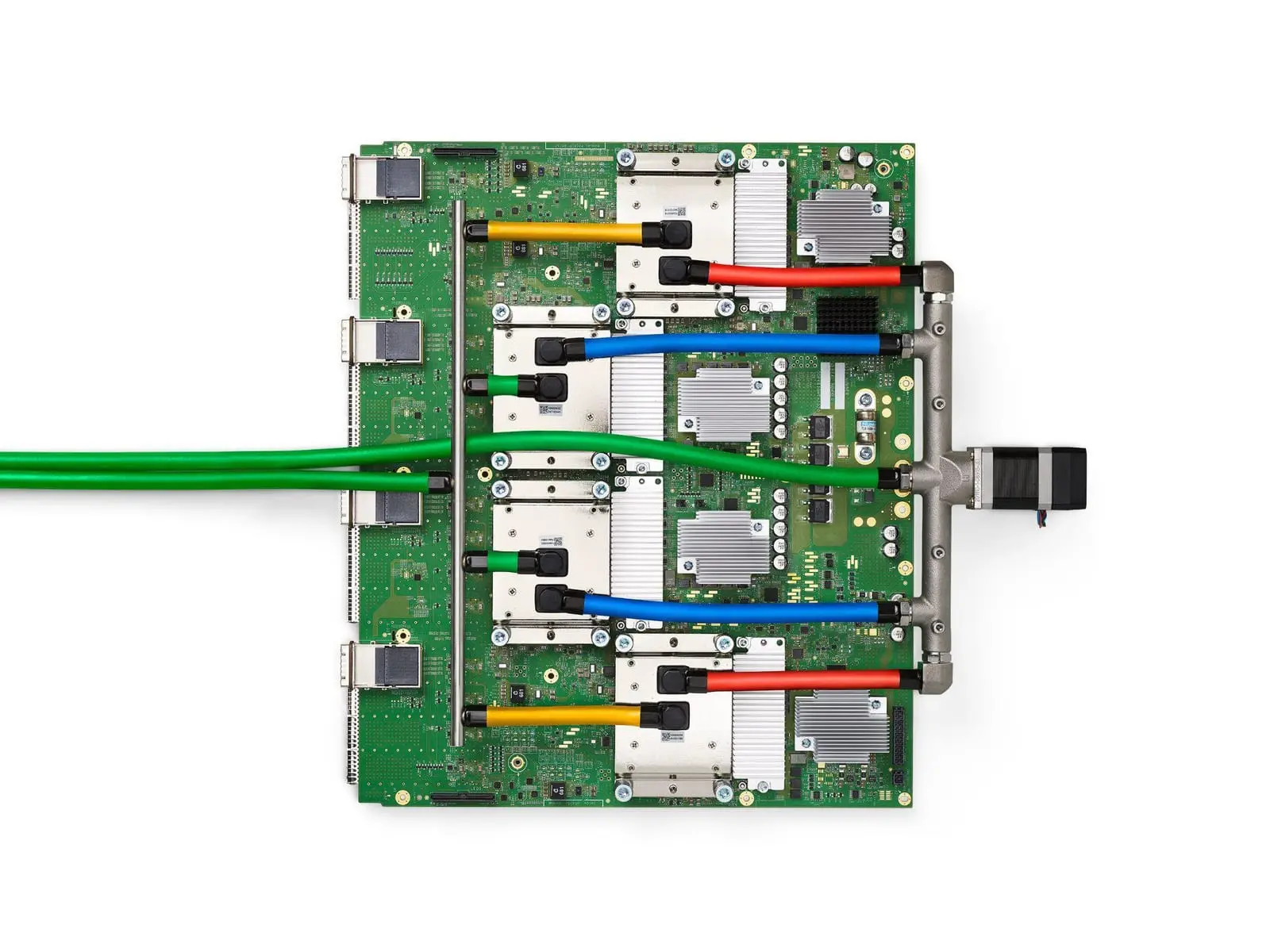
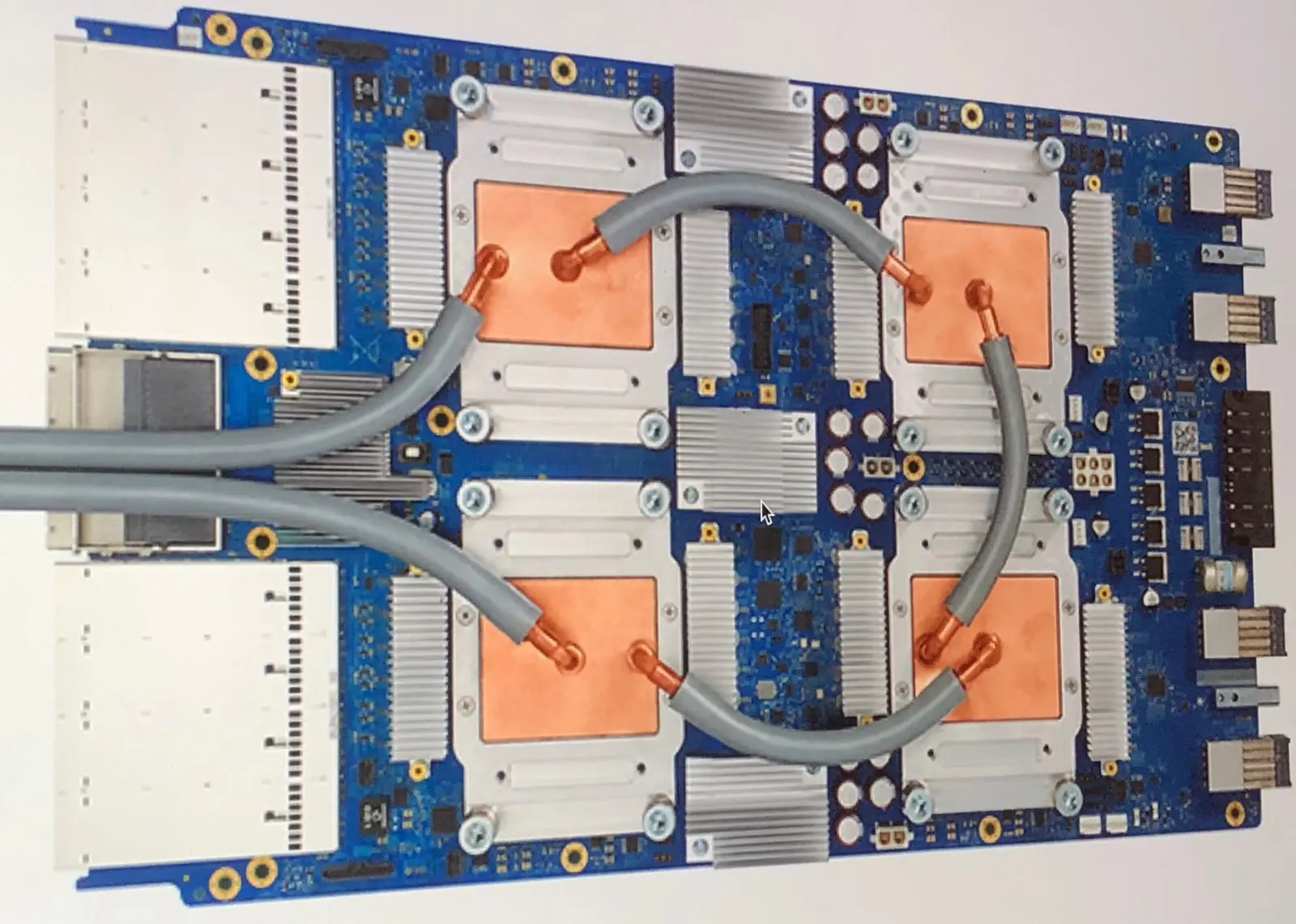
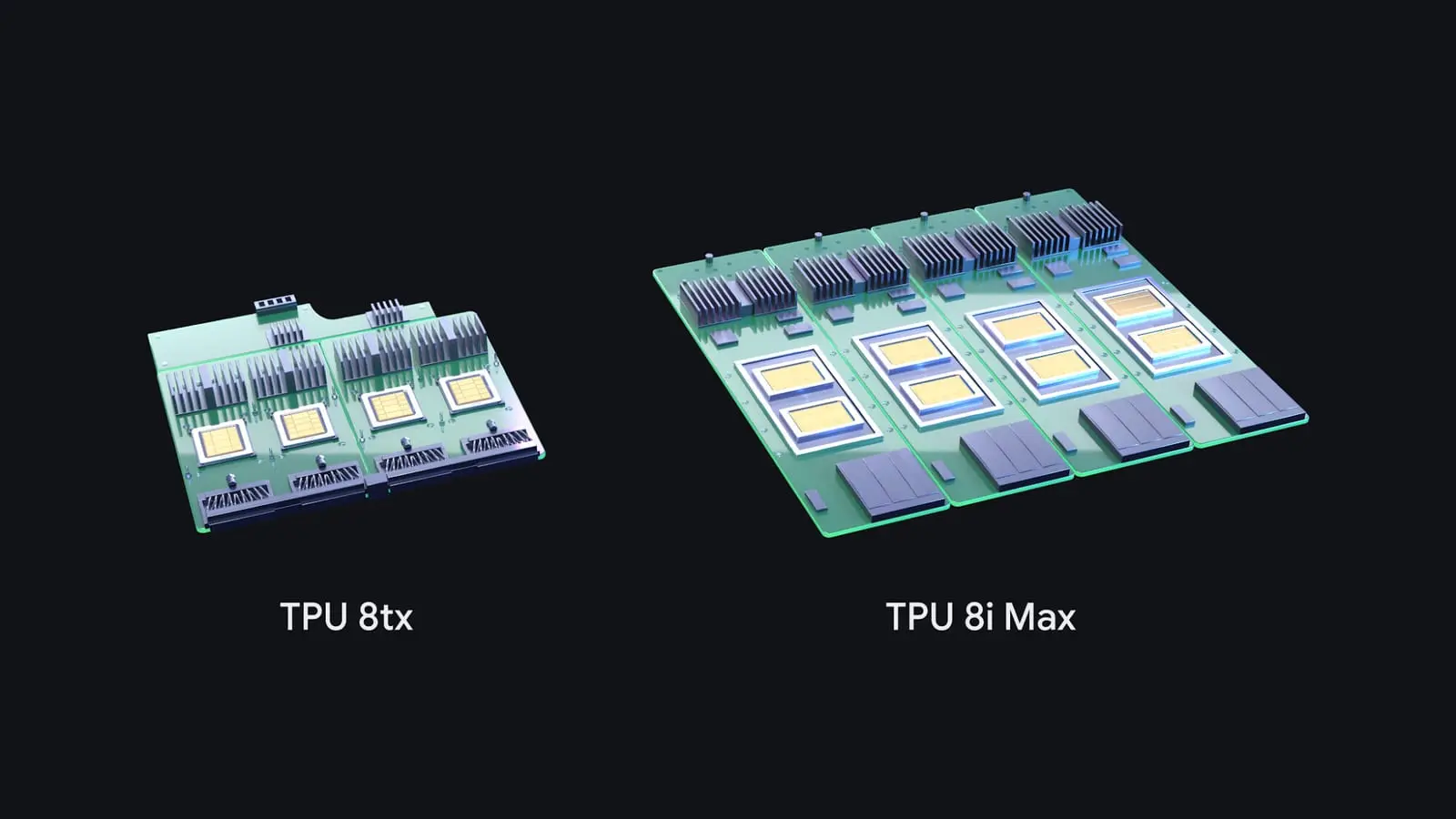
Google added two systems to its eighth TPU generation on 9 November 2026. TPU 8tx uses TPU 8t silicon with 5th Generation AMD EPYC hosts to keep data and model weights protected while in use, with up to 2x lower latency than TPU 8t. TPU 8i Max packs two TPU 8i chips into one package for double the compute, SRAM and HBM bandwidth. Google gave no prices or availability dates.
Key facts
- Announced: 9 November 2026 (Google Cloud blog, Amin Vahdat)
- TPU 8tx: TPU 8t silicon, 5th Generation AMD EPYC hosts, confidential inference, up to 2x lower latency than TPU 8t (Google)
- TPU 8i Max: two TPU 8i chips in one package, double compute, SRAM and HBM bandwidth of TPU 8i (Google)
- Google says TPUs now have nearly 100 customers, including frontier labs, trading firms, retailers and universities
- Not stated: prices, availability dates, regions, HBM capacity in gigabytes
What Google announced
Google expanded its eighth generation of Tensor Processing Units with two new systems on 9 November 2026. In a post on the Google Cloud blog, Amin Vahdat, Google's chief technologist for AI and infrastructure, introduced TPU 8tx for secure and confidential inference and TPU 8i Max for very large context windows and the highest compute density per rack. They join TPU 8t for training and TPU 8i for low-latency inference, which Google unveiled at Cloud Next in April. Google says this is the first time it has introduced four TPU systems in a single year.
Vahdat stresses that these are new systems rather than new chips. Both reuse existing eighth-generation silicon and change how compute, memory, networking and security are packaged around it, which Google says lets it deliver specialized configurations in months rather than years. Google also says TPUs have become a fast-growing business with nearly 100 customers, including frontier labs, trading firms, retailers and universities, and that some customers now deploy TPUs inside their own data centers.
TPU 8tx: confidential inference on AMD hosts
TPU 8tx is aimed at regulated enterprises and governments that run frontier or proprietary models and agents on their most sensitive data. Data is normally encrypted at rest and in transit but must be decrypted in memory while it is processed. TPU 8tx is built on the same silicon as TPU 8t and paired with 5th Generation AMD EPYC CPU hosts from AMD, and Google says it builds security into the hardware layer so that data and model weights stay protected and isolated even while in active use.
The system also uses Boardfly, the low-latency network topology Google created for TPU 8i. Google claims this gives TPU 8tx up to 2x lower latency than TPU 8t with a near-zero performance penalty for the security features. Because it combines training-grade compute with an inference network, Google pitches TPU 8tx for private fine-tuning, distilling large models into smaller ones and reinforcement learning on agents, without moving sensitive data between separate clusters. The post does not say which attestation scheme the confidential mode uses or how keys are managed.
TPU 8i Max: two inference chips in one package
TPU 8i Max targets what Google calls the memory wall. When many agents work across a whole codebase or hours of video at once, memory bandwidth rather than raw compute becomes the bottleneck. Google combined two TPU 8i chips on a single package, which it says doubles the compute, the on-chip SRAM and the HBM bandwidth of TPU 8i. Because twice the silicon fits in the existing rack footprint, Google says data centers can deploy more computing power per square foot and per watt.
For comparison, Google said in April that TPU 8t offers up to 2.7 times better training performance and TPU 8i 80% better inference price performance than the previous generation. Google gave no equivalent per-chip figures, prices or availability dates for the new systems, and the post does not state the HBM capacity of TPU 8i Max in gigabytes. Press coverage, including Quartz, framed the launch as part of Google's push to compete with Nvidia GPUs.
The software around the chips and what to watch
Google paired the hardware with software releases. It points to TorchTPU, open-sourced last month so PyTorch code and Hugging Face models run natively on TPUs, and announced an open-source TPU agent suite in preview that plugs into coding tools such as Claude Code, Cursor and Google Antigravity to onboard TPUs and tune kernels. It also open-sourced TPU Sync, which tiers KV caches across chip memory, host memory and storage and which Google says cuts KV transfer latency and time to first token by more than 90%. Cloud Pathways and GKE dynamic slicing are now generally available, and a new Agent Compute Engine suspends and resumes idle agent sessions to save cost.
The launch follows Google's deal to offer TPUs on Oracle Cloud Infrastructure from 2027 and Hugging Face's native TPU support. Open questions are when TPU 8tx and TPU 8i Max reach Google Cloud regions or customer data centers, what they cost, and whether outside auditors will review the confidential computing design. More chip news is in the AI chips hub.
What changed
| Before | Eighth-generation TPU line: TPU 8t for training and TPU 8i for low-latency inference, announced in April 2026 |
|---|---|
| After | Four systems: TPU 8tx adds hardware confidential inference with AMD EPYC hosts, TPU 8i Max puts two TPU 8i chips in one package for double compute, SRAM and HBM bandwidth |
| Who it affects | Regulated enterprises and governments running sensitive AI workloads; labs and cloud customers serving long-context agents on TPUs |
Questions people ask
- What is Google TPU 8tx?
- An eighth-generation TPU system built on TPU 8t silicon with 5th Generation AMD EPYC hosts, designed to keep data and model weights protected while in use for confidential inference and small-scale training, according to Google.
- How is TPU 8i Max different from TPU 8i?
- TPU 8i Max combines two TPU 8i chips on one package, which Google says doubles compute, on-chip SRAM and HBM bandwidth and fits twice the silicon in the same rack footprint.
- When will TPU 8tx and TPU 8i Max be available?
- Google's announcement does not give availability dates or prices for either system.
Sources
- Our newest TPUs: 8tx and 8i Max, built for the agentic era (Google Cloud, 9 Nov 2026)
- Introducing TPU Sync: Fast KV cache and weight transfer for inference and RL on TPU (Google Cloud, 9 Nov 2026)
- Google is unveiling two specialized AI chips to challenge Nvidia (Quartz, 9 Nov 2026)
Reference pages
Spotted an error? See the corrections policy and tell the editor. Facts in this story come from the sources listed above; vendor claims are attributed.
Comments
Loading comments.