Google releases Gemini 4 Hydrogen at $1.50 per 1M tokens and makes it the Search default
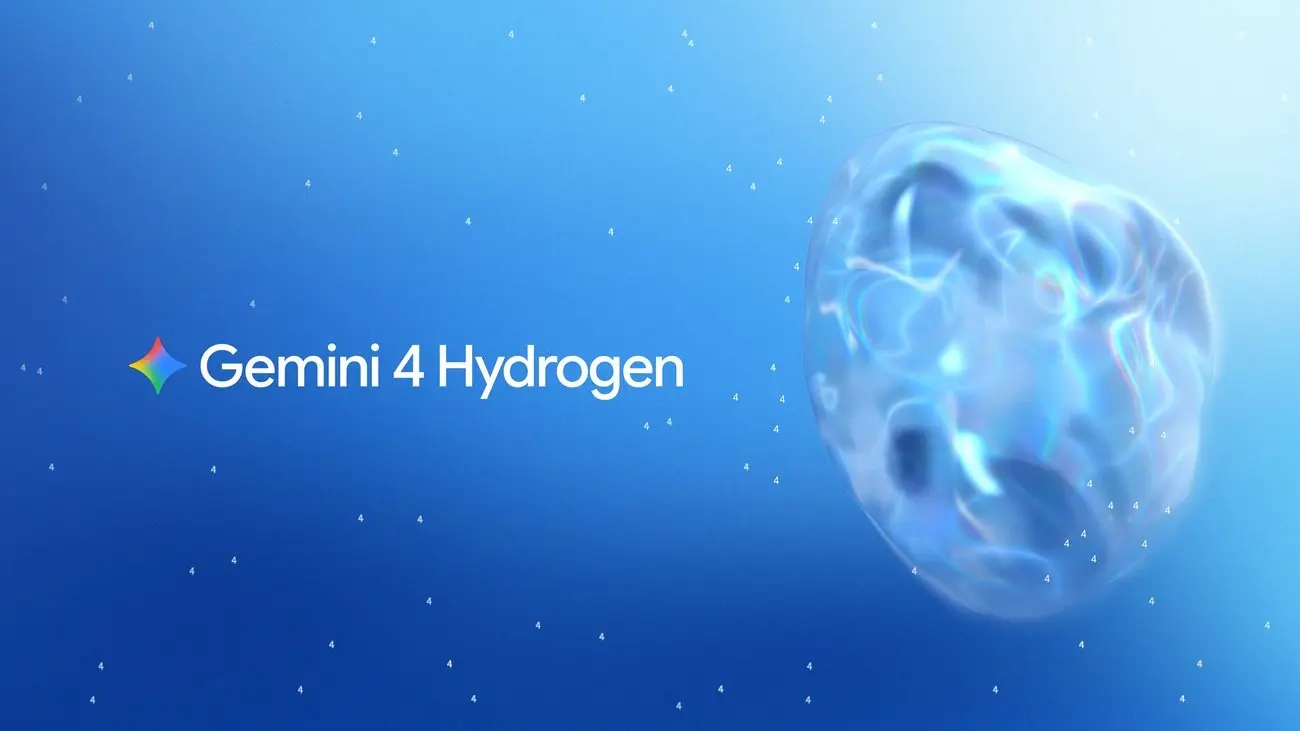
Google released Gemini 4 Hydrogen on 12 November 2026, a fast model priced at $1.50 and $7.50 per 1M tokens that now runs AI Mode in Search for all users.
By Berkant A.Published
 Tech AI Latest
Google released Gemini 4 Hydrogen on 12 November 2026, the third and fastest model in the Gemini 4 family. It costs $1.50 per million input tokens and $7.50 per million output tokens across a 1 million token context window, and Google says it beats the larger Gemini 4 Argon on the Artificial Analysis Intelligence Index. Hydrogen is now the default model in AI Mode in Google Search worldwide and is available to developers today.
Key facts
- Announced: 12 November 2026 (Google blog)
- Price: $1.50 per 1M input tokens and $7.50 per 1M output tokens, flat across the full context window
- Context window: 1,048,576 tokens; knowledge cutoff March 2026, according to the Google Cloud model page
- Thinking levels: low, medium, high (default) and a new xhigh level
- Google-reported results: 51 on the Artificial Analysis Intelligence Index at high (Argon: 50), 54 at xhigh; 57.0% on Terminal-Bench 4.1 against 18.2% for Gemini 3.8 Flash
- Availability: Gemini API, AI Studio, Android Studio, Antigravity, Gemini Enterprise Agent Platform, the Gemini app, and AI Mode in Search for all users
What Google released
Google released Gemini 4 Hydrogen on Thursday, 12 November 2026, adding a third model to the Gemini 4 family built by Google DeepMind. In the launch post, signed by Koray Kavukcuoglu, Google describes Hydrogen as a fast, cost-efficient model for everyday coding and agentic workflows. The two earlier models, Gemini 4 Argon from 13 October and Gemini 4 Carbon from 28 October, remain the family's frontier models for deep, long-horizon reasoning on the hardest problems.
Google compares Hydrogen throughout the announcement with Gemini 3.8 Flash, its previous fast model, which developers have used for high-volume and latency-sensitive work. According to Google, Hydrogen finishes tasks about 2.5 times faster than Gemini 3.8 Flash at its default setting and makes more than five times fewer fabricated claims.
The model is generally available from launch rather than in a staged preview. Google's developer post says it is rolling out to developers in the Gemini API, Google AI Studio and Android Studio, and in Google Antigravity, the company's agentic coding environment, for paid Google AI Pro and Ultra subscribers. The Google Cloud model page lists Gemini 4 Hydrogen as generally available on Gemini Enterprise Agent Platform with a release date of 12 November 2026. Consumers get it in the Gemini app and, most visibly, in Google Search.
Price and benchmarks
Google prices Hydrogen at $1.50 per million input tokens and $7.50 per million output tokens, and says the price is flat across the entire 1 million token context window, so long prompts do not move into a higher price band. For comparison, Gemini 4 Carbon costs $2 per million input tokens and $10 per million output tokens until 30 November 2026 and $4 and $20 after that; Argon follows the same introductory and standard prices. On list prices, Hydrogen costs a quarter of what Carbon will cost from December for input, and slightly over a third for output. Hydrogen offers four thinking levels, low, medium, high (the default) and a new xhigh, and the higher levels spend more output tokens on reasoning, so the effective cost of a task depends on the level an application uses.
Google's headline benchmark claim is that Hydrogen beats Argon, a larger and more expensive model released four weeks earlier. On the Artificial Analysis Intelligence Index, an independent composite of several evaluations, Google reports a score of 51 for Hydrogen at the default high level, against 50 for Argon, rising to 54 at xhigh. Carbon remains above both, with a score of 59 that Google reported at its launch. These numbers come from Google's announcement; Artificial Analysis publishes its own leaderboard, and independent results can differ from the vendor's reading.
On coding and terminal work, Google reports that Hydrogen scores 57.0% on Terminal-Bench 4.1, against 18.2% for Gemini 3.8 Flash. That is a large jump for a fast model, but it does not put Hydrogen at the top of the benchmark: coverage of the launch by Xenospectrum notes that Anthropic's Claude Sonnet 5.5 scores higher on the same test. Independent testing will matter. One early independent review reported lower scores on some agentic terminal benchmarks than Google's headline figures, which is a reminder that results depend on the harness and the task set.
Hydrogen in Search and Antigravity
The largest audience for Hydrogen is Search. Google says in a separate post that Gemini 4 Hydrogen is now the default model in AI Mode, the conversational search experience, for all users worldwide without a waitlist, and that it also handles the hardest questions in AI Overviews, the AI summaries above ordinary results. Robby Stein of Google's Search team called it the biggest model upgrade to Search yet, according to Search Engine Roundtable and Search Engine Journal.
For developers, the most interesting addition may be Orchestrator in Antigravity. Google says Orchestrator switches dynamically between models such as Carbon and Hydrogen within one session: one model coordinates the work and others carry out coding, testing and verification. On Terminal-Bench 4.0, Google says, Orchestrator reached task success rates close to those of Carbon alone while using 24% less quota on average and finishing tasks 19% faster. That claim rests on Google's own runs.
What changes for developers and what to watch
Competition in the fast tier is intense. OpenAI's GPT-6.1 Terra and Anthropic's Claude Sonnet 5.5 target the same buyers who want frontier-like quality at a fraction of the frontier price, and Meta's Muse Ember aims lower, at agent subtasks. Hydrogen's main advantage is distribution: as the default model in AI Mode, it will process a very large number of real queries from its first day, which no developer-only release can match.
Several points remain open. The launch coverage does not give a retirement date for Gemini 3.8 Flash in the API, so teams can migrate on their own schedule for now, but they should expect Google to announce one. It is not clear from the announcements whether free users of the Gemini app can select Hydrogen, even though everyone using AI Mode in Search now gets it by default. Google has also not said which thinking level powers Search, which matters because the same model can behave quite differently at low and at xhigh.
The release also fills out the AI model release tracker, where Hydrogen is now the lowest-priced model of the Gemini 4 family. For more on new models from all labs, see the AI models hub.
What changed
| Before | Google's fast model was Gemini 3.8 Flash; the Gemini 4 family had only Argon and Carbon, both at $2 and $10 per 1M tokens introductory and $4 and $20 later |
|---|---|
| After | Gemini 4 Hydrogen at $1.50 and $7.50 per 1M tokens with a 1,048,576 token context window; default model in AI Mode in Search for all users; available in the Gemini API, AI Studio, Antigravity and Gemini Enterprise Agent Platform |
| Who it affects | Developers on Gemini 3.8 Flash; Google Search users of AI Mode and AI Overviews; Gemini app and Antigravity users; publishers that depend on search traffic |
Questions people ask
- How much does Gemini 4 Hydrogen cost?
- Google lists $1.50 per million input tokens and $7.50 per million output tokens, flat across the full 1 million token context window.
- Is Gemini 4 Hydrogen better than Gemini 4 Argon?
- Google says Hydrogen scores 51 on the Artificial Analysis Intelligence Index at its default high thinking level, against 50 for Argon, and 54 at xhigh. These are Google-reported figures; Gemini 4 Carbon remains Google's highest-scoring model.
- Where can I use Gemini 4 Hydrogen?
- In the Gemini API, Google AI Studio, Android Studio, Google Antigravity for AI Pro and Ultra subscribers, Gemini Enterprise Agent Platform, the Gemini app, and as the default model of AI Mode in Google Search for all users.
- What is the context window of Gemini 4 Hydrogen?
- 1,048,576 tokens, with a knowledge cutoff of March 2026, according to the Google Cloud model page.
Sources
- Introducing Gemini 4 Hydrogen (Google, 12 Nov 2026)
- Gemini 4 Hydrogen: everyday coding and agentic workflows for developers (Google, 12 Nov 2026)
- Google Search gets a major upgrade with Gemini 4 Hydrogen (Google, 12 Nov 2026)
- Gemini 4 Hydrogen model page (Google Cloud, 12 Nov 2026)
- Google releases Gemini 4 Hydrogen, a lower-cost model said to outscore Argon (SiliconANGLE, 12 Nov 2026)
- Google announces Gemini 4 Hydrogen with significant leaps in speed, intelligence (9to5Google, 12 Nov 2026)
- Google Makes Gemini 4 Hydrogen The Default Model In AI Mode (Search Engine Journal, 12 Nov 2026)
- Google's Gemini 4 Hydrogen outscores the bigger Argon just four weeks after its launch (The Decoder, 12 Nov 2026)
Reference pages
- Gemini 4 Hydrogen model
- Gemini 4 Carbon model
- Gemini 4 Argon model
- Google company
- Google DeepMind company
- Gemini app tool
Spotted an error? See the corrections policy and tell the editor. Facts in this story come from the sources listed above; vendor claims are attributed.
Comments
Loading comments.