Gemini 4 Hydrogen, Claude Fable 5.2 and Muse Ember: what do this week's AI models cost?
Six models launched or widened access between 5 and 12 November 2026. We compare list prices, what one workload costs on each, and the vendors' own benchmarks.
By Berkant A.Published
 Tech AI Latest
Between 5 and 12 November 2026, Google, Anthropic, Meta, Alibaba and Thinking Machines Lab released or widened access to six models. On list prices, a workload of 100 million input and 20 million output tokens a month costs about $20 on Meta's Muse Ember, $300 on Gemini 4 Hydrogen, $400 on Gemini 4 Carbon until 30 November and $1,600 on Claude Fable 5.2. The benchmark figures behind these models come from the vendors and are not directly comparable.
Key facts
- Cheapest new model: Meta's Muse Ember at $0.10 input and $0.50 output per 1M tokens (Meta)
- Google's new default: Gemini 4 Hydrogen at $1.50 and $7.50 per 1M tokens, flat across a 1,048,576-token context (Google)
- Price change ahead: Gemini 4 Carbon doubles from $2 and $10 to $4 and $20 per 1M tokens on 1 December
- Most expensive: Claude Fable 5.2 at $8 and $40 per 1M tokens, 20% below Fable 5.1
- Example workload (100M input, 20M output tokens a month): $20 Muse Ember, $300 Hydrogen, $1,600 Fable 5.2, at list prices
- No per-token price yet: Qwen4-Max, in preview on Alibaba's Token Plan until 25 November
The models that arrived this week
Six text models were released or opened to more users between 5 and 12 November 2026, and four of them come with a public per-token price. This piece puts those prices side by side, using the figures in our model release tracker, which in turn come from each developer's own announcement and pricing page.
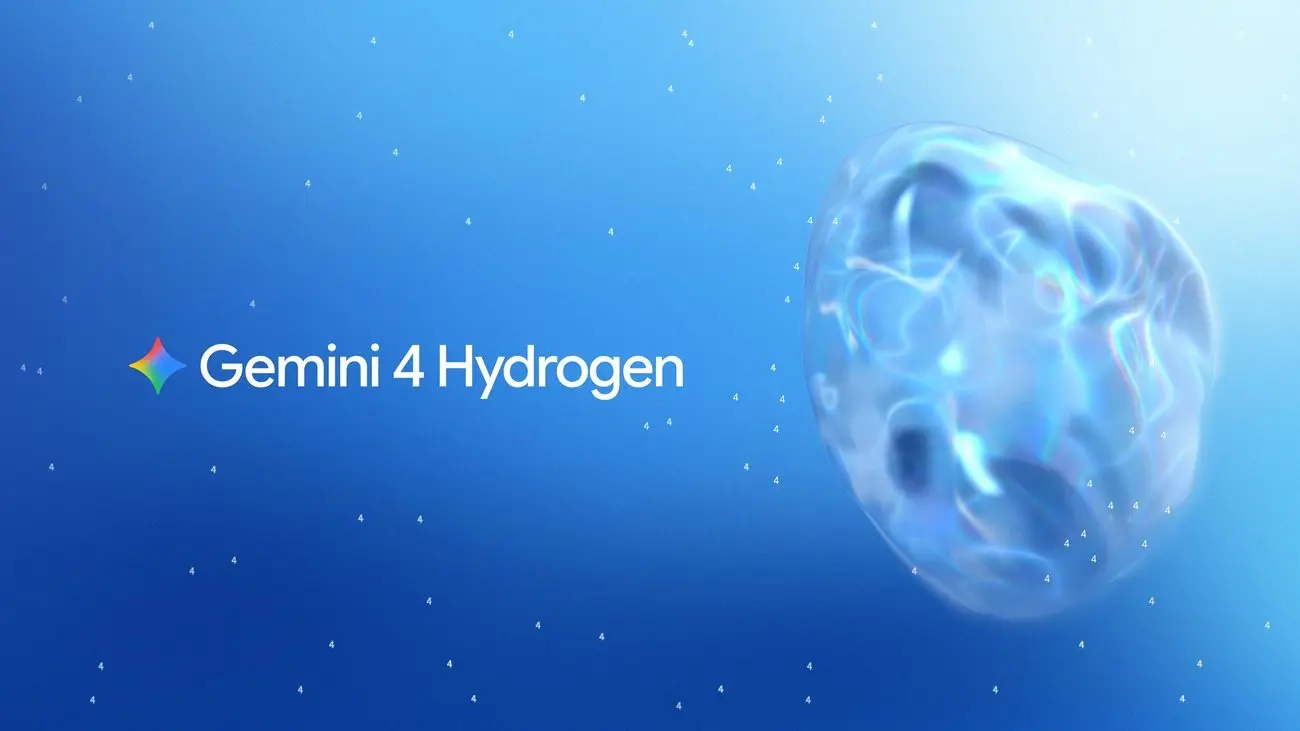
Gemini 4 Hydrogen is the newest. Google released it on 12 November as the fastest model in the Gemini 4 family, at $1.50 per million input tokens and $7.50 per million output tokens, flat across a context window of 1,048,576 tokens. It is now the default model in AI Mode in Google Search, as we reported this morning. Two days earlier Google opened Gemini 4 Carbon, its most capable model, to paying developers at an introductory $2 and $10 per million tokens until 30 November, rising to $4 and $20 from 1 December (our story).
Anthropic released Claude Fable 5.2 and its vetted twin Mythos 5.2 on 9 November at $8 per million input tokens and $40 per million output tokens, down from $10 and $50 for Fable 5.1, with a 1 million token context window and an optional fast mode at double the price (our story). On the same day Meta launched Muse Ember, its smallest Muse model, at $0.10 input and $0.50 output per million tokens for prompts up to 200,000 tokens, aimed at tool calls, routing and coding subtasks inside agents (our story).
Two more models complete the week. Thinking Machines Lab released Inkling 2 Small on 5 November, a mixture-of-experts model with 594 billion total and 17 billion active parameters, on its Tinker platform at $0.30 input and $1.00 output per million tokens as listed in launch coverage, with open weights promised after safety testing (our story). Alibaba opened a 15-day preview of Qwen4-Max on 11 November with a 1 million token context, but only through its credit-based Token Plan subscription, so there is no per-token price to compare yet (our story).
What one workload costs on each model
Per-token prices are hard to read at a glance, so here is one concrete case: an application that sends 100 million input tokens and receives 20 million output tokens a month. That is roughly the volume of a busy internal assistant or a mid-sized coding agent deployment. The arithmetic below uses list prices only, with no caching, batch discounts or volume deals.
On Muse Ember the month costs about $20: $10 for input and $10 for output. On Inkling 2 Small at the Tinker price it is about $50: $30 for input and $20 for output. On Gemini 4 Hydrogen it is $300: $150 for input and $150 for output. On Gemini 4 Carbon it is $400 at the introductory price, and $800 once the price doubles on 1 December. On Claude Fable 5.2 it is $1,600: $800 for input and $800 for output, against $2,000 on Fable 5.1 before the cut. Fable 5.2's fast mode would double that to $3,200.
For comparison with last week's open-weight release, Moonshot AI's Kimi K3.1 Pro, priced at $2 and $10 per million tokens on Moonshot's own API, would cost $400 for the same month, the same as Carbon's introductory price, with the option to run the weights yourself instead.
Two things change the picture in practice. First, output tokens are where the money goes for agents and reasoning models: every model here charges five times as much for output as for input, except Inkling 2 Small at about three times, so a workload heavy on long answers or long chains of reasoning shifts the totals toward the output column. Second, caching matters for repeated context. Anthropic charges $0.20 per million tokens for cache reads on Fable 5.2, and Meta lists $0.004 per million for cached input on Muse Ember, so an agent that resends the same instructions and documents on every call pays far less than the list input price suggests.
Price against capability: what the vendors claim
Price only means something next to what the model can do, and here the comparison gets weaker, because each vendor reports different benchmarks. Google says Gemini 4 Hydrogen scores 51 on the Artificial Analysis Intelligence Index at its default high thinking level and 54 at the new xhigh level, against 50 for the larger Gemini 4 Argon, and 57.0% on Terminal-Bench 4.1. Meta cites a score of 36 on the same index for Muse Ember, level with Claude Haiku 5.5. Artificial Analysis itself scores Inkling 2 Small at 31.
Anthropic does not lead with that index. It reports that Claude Fable 5.2 scores 49.1% on FrontierCode 2.0 at its highest effort setting, against 45.5% for Claude Opus 5.5 and 42.8% for OpenAI's GPT-6 Astra, in its own testing. Google has not published a context window for Gemini 4 Carbon, and Alibaba has published no benchmarks for Qwen4-Max at all.
Read together, the claims suggest a rough ladder rather than a ranking. Muse Ember and Inkling 2 Small sit at the bottom of the price range with index scores in the 30s. Hydrogen claims a score in the 50s at $1.50 per million input tokens, which, if independent testing confirms it, makes it the cheapest route this week to a model that Google places above its own larger Argon. Fable 5.2 and Carbon are priced for the hardest coding and agent tasks, where Anthropic and Google each claim the lead on different tests. None of these numbers are independent head-to-head results, and a team choosing a model should test on its own tasks.
Which model fits which job
For high-volume steps inside an agent, such as classifying a request, choosing a tool or extracting fields from a document, the cost gap is large enough to decide the question: at the example volume, Muse Ember costs $20 a month where Hydrogen costs $300. Meta built Ember for exactly that role. Inkling 2 Small is the option for teams that want to fine-tune on Tinker now and expect to self-host once the weights ship.
For a general default model in a product, Hydrogen is Google's own answer: it now runs AI Mode in Search, and its flat price across the full context window removes the surcharge for long prompts that some rivals apply. Teams already on Gemini 3.8 Flash are the obvious candidates to test it.
For the hardest work, long coding sessions, security research and multi-step agents, the choice this week is between Carbon and Fable 5.2. Carbon is cheaper until 30 November and still half of Fable's input price after the increase. Fable 5.2 is the more expensive of the two but cut its price by 20% and is available on the Claude Platform and the three big clouds, which matters for companies that buy AI through an existing AWS, Google Cloud or Azure contract.
What to watch next
Three dates matter in the next few weeks. Alibaba's Qwen4-Max preview ends on 25 November, and a per-token price, if Alibaba publishes one, will show where Qwen4 sits against the models above. Gemini 4 Carbon's introductory price ends on 30 November, doubling the cost of any workload on it from 1 December. And Thinking Machines has not given a date for releasing Inkling 2 Small's weights.
Our AI model API pricing guide keeps the full table of current list prices and is rebuilt with every new row in the tracker, and the open-weight models guide lists the licences for models you can run yourself. All guides are on the guides page, and every release is in AI Models.
Questions people ask
- Which AI model released this week is the cheapest?
- Meta's Muse Ember, at $0.10 per million input tokens and $0.50 per million output tokens for prompts up to 200,000 tokens, according to Meta.
- How much does Gemini 4 Hydrogen cost compared with Claude Fable 5.2?
- Gemini 4 Hydrogen costs $1.50 input and $7.50 output per million tokens; Claude Fable 5.2 costs $8 and $40. For 100 million input and 20 million output tokens a month, that is $300 against $1,600 at list prices.
- Is the Gemini 4 Carbon price going up?
- Yes. Google's introductory price of $2 input and $10 output per million tokens runs until 30 November 2026, then rises to $4 and $20.
- Are the benchmark scores comparable across these models?
- Only partly. Google and Meta cite the Artificial Analysis Intelligence Index, while Anthropic leads with FrontierCode 2.0, and most figures are the vendors' own. Test models on your own tasks before choosing.
Sources
- Introducing Gemini 4 Hydrogen (Google, 12 Nov 2026)
- Gemini 4 Carbon is now available (Google, 10 Nov 2026)
- Introducing Claude Fable 5.2 and Claude Mythos 5.2 (Anthropic, 9 Nov 2026)
- Pricing (Anthropic, 9 Nov 2026)
- Introducing Our Smallest, Most Efficient Model: Muse Ember (Meta, 9 Nov 2026)
- Introducing Inkling 2 Small (Thinking Machines Lab, 5 Nov 2026)
- Qwen4 is coming: Qwen4-Max is now in preview on Alibaba's Token Plan (Alibaba Qwen, 11 Nov 2026)
Reference pages
- Gemini 4 Hydrogen model
- Gemini 4 Carbon model
- Claude Fable 5.2 model
- Muse Ember model
- Qwen4-Max model
- Inkling 2 Small model
- Google company
- Anthropic company
- Meta company
- Alibaba company
- Thinking Machines Lab company
Spotted an error? See the corrections policy and tell the editor. Facts in this story come from the sources listed above; vendor claims are attributed.
Comments
Loading comments.