NVIDIA unveils GR00T 2 robot model trained on 100,000 hours of human video at CoRL
NVIDIA announced GR00T 2 at CoRL 2026 on 9 November, an open world action model for robots trained partly on 100,000 hours of first-person human video.
By Emre A.Published
 Tech AI Latest
NVIDIA announced GR00T 2 on 9 November 2026 at the Conference on Robot Learning in Austin. It calls the model an open world action model built on Cosmos, trained on robot data and 100,000 hours of first-person human video. NVIDIA says it completed 40 of 50 test tasks without demonstrations and reached 95% average success with five. Foxconn, Siemens and Nexuni are testing it. Availability was not stated.
Key facts
- Announced: 9 November 2026 at CoRL 2026, Austin (NVIDIA blog)
- Model: open world action model built on NVIDIA Cosmos, predicting how actions change what the robot sees
- Training data: robot data plus 100,000 hours of egocentric human video that NVIDIA says it is releasing openly
- NVIDIA's results: 40 of 50 tasks done at least once with no demonstrations; 71% average success with one demonstration, 95% with five
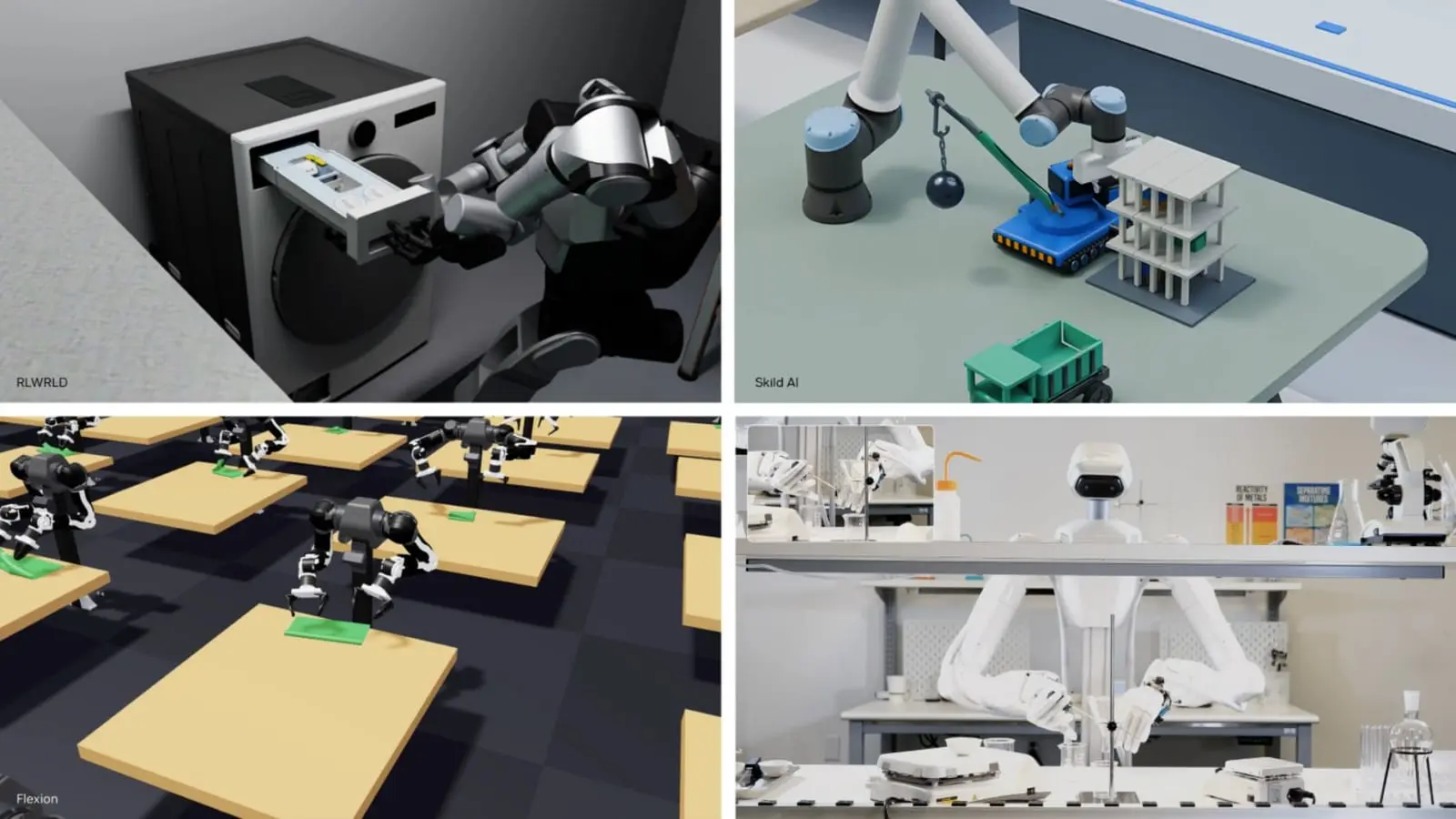
- Early users: Nexuni (laundry), Foxconn (server manufacturing), Siemens (industrial evaluation), MicroAGI (cable swapping)
- Not stated: release date, access terms and licence for the model weights
What NVIDIA announced at CoRL
NVIDIA introduced GR00T 2 on 9 November 2026 at the Conference on Robot Learning (CoRL), which runs in Austin, Texas, from 9 to 12 November. In a post on the NVIDIA blog titled Practice Makes Precise, the company describes GR00T 2 as an open frontier world action model built on its Cosmos world foundation models. The name places it as the successor to the GR00T N1 family of vision language action models that NVIDIA first released in March 2025 and updated several times since.
GR00T 2 was trained on a mixture of robot data and human data. NVIDIA says the human portion includes 100,000 hours of egocentric, or first-person, video of people doing tasks with their hands, and that this data is open source. Coverage by The Next Web reports that NVIDIA is releasing the footage for anyone to use. According to NVIDIA, this lets the model transfer skills learned from watching people to different robot bodies without needing robot demonstrations for each one.
The company published a set of results with the announcement. Out of the box, GR00T 2 completed 40 of 50 evaluated tasks at least once without any task-specific demonstrations. With one demonstration per task, average success was 71%; with five demonstrations, it rose to 95%. NVIDIA also says GR00T 2 ranks among the top three models across both vision language action and world action model categories on the RoboCasa365, RoboLab, RoboDojo and MolmoSpaces benchmarks.
These are NVIDIA's own numbers. The Next Web notes that NVIDIA's own paper says the evaluated tasks were picked from ones the model could already learn well, which means the 95% figure describes performance on a favourable set of tasks rather than on arbitrary household or factory work. Independent evaluations had not been published at the time of writing.
Who is already testing it
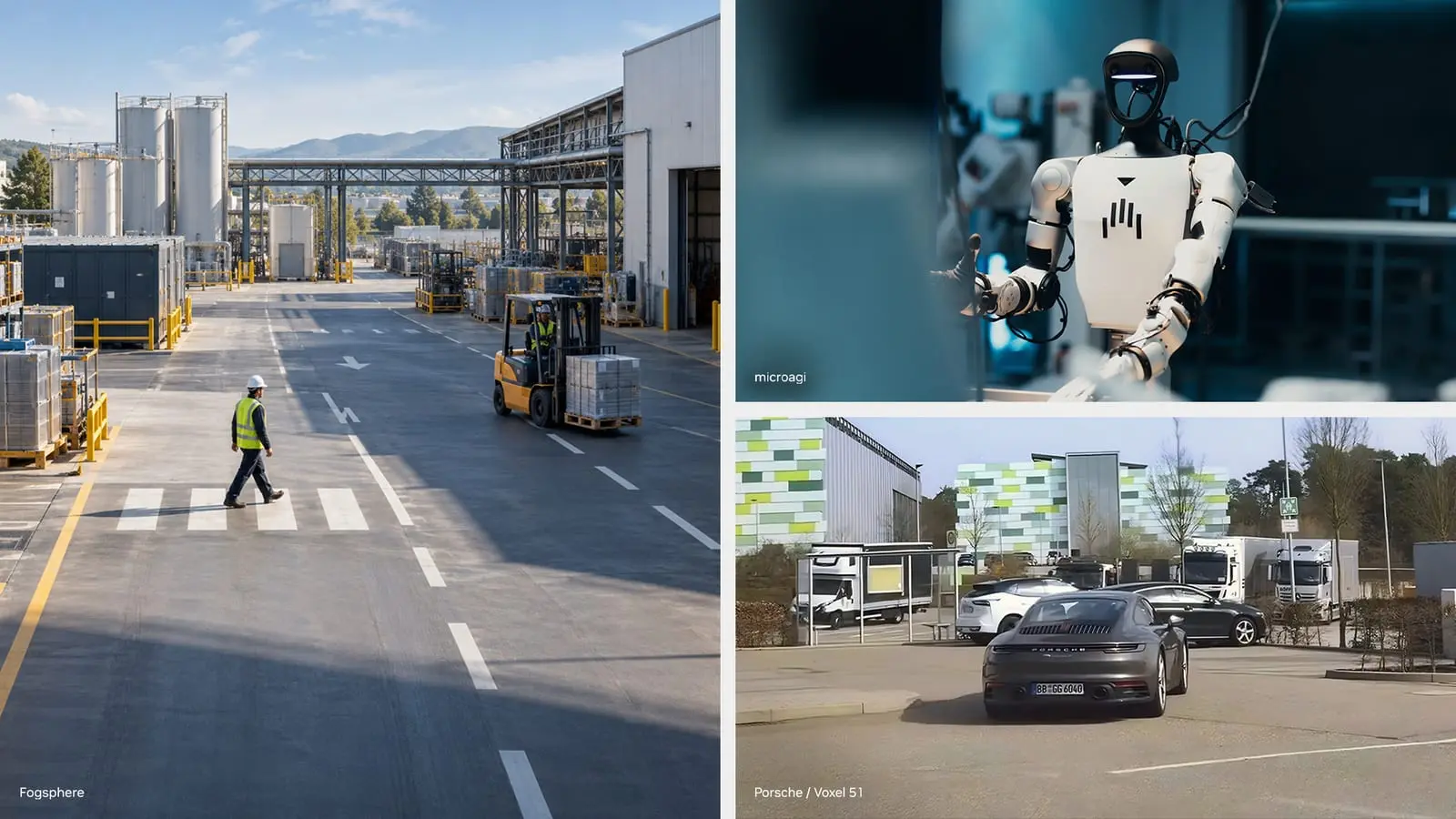
NVIDIA named several companies that are working with GR00T 2. Nexuni is testing it for laundry handling, a task that involves deformable fabric and has long been hard for robots. Foxconn is applying it to automation in the manufacturing of AI servers, the same racks that carry NVIDIA's own accelerators. Siemens is evaluating industrial use cases. According to The Next Web, none of these companies has said it will put GR00T 2 into production yet; the announcements describe tests and evaluations.
The most detailed example in NVIDIA's post comes from MicroAGI. The company post-trained GR00T 2 with reinforcement learning to swap Ethernet cables on a YAM robot arm, a fiddly task that needs precise insertion. MicroAGI's approach uses an agent to build and calibrate simulation environments in Isaac Lab 3.0 and the Newton physics engine, trains the policy there, and then transfers it to the real arm. NVIDIA presents this as the pattern it wants the industry to follow: rehearse delicate work in simulation, then deploy.
None of the partners has published its own figures. Until they do, the results attached to GR00T 2 come from NVIDIA alone, and the partner names should be read as early access and evaluation, not as deployments.
Why training on human video matters
Human video is cheap to collect at scale, and 100,000 hours is far more manipulation footage than any single lab has gathered with robots. The challenge is the embodiment gap: human hands, arms and viewpoints differ from those of a robot, so the model has to learn what an action achieves rather than copying the exact motion. NVIDIA's claim that GR00T 2 transfers skills from human demonstrations to different robot bodies without robot demonstrations is the core of the announcement, and it is also the part that most needs independent testing.
The approach fits a wider pattern in NVIDIA's robotics strategy. The company sells the GPUs used to train these models, the Jetson Thor computers that run them on robots, and the simulation software in which they are tested. In October it presented a Cosmos data factory for generating synthetic training data with world models. Each open model it releases gives robot makers another reason to build on that stack rather than on a competitor's.
Competitors are working on similar ideas. Several robotics labs train vision language action models and world models for manipulation, and Physical Intelligence opened beta API access to its robot models in October. What NVIDIA brings is the combination of a large open dataset, an open model and an end-to-end toolchain. Whether that is enough to make GR00T 2 the default starting point depends on how quickly developers can actually download and fine-tune it.
What to watch next
The first thing to watch is availability. NVIDIA calls GR00T 2 open but did not say when developers can download it, which licence will apply or which hardware it needs. Earlier GR00T N1 models were published on Hugging Face with model cards, and a similar release would let outside researchers check the reported results. This story will be updated when NVIDIA publishes a model card or a release date.
For more coverage of robot models and deployments, see the robotics hub and the NVIDIA company page, which keeps a dated timeline of the company's announcements.
What changed
| Before | NVIDIA's GR00T N1 family were vision language action models trained largely on robot and synthetic data |
|---|---|
| After | GR00T 2 is announced as an open world action model built on Cosmos, trained with 100,000 hours of first-person human video, with NVIDIA reporting 95% average success after five demonstrations |
| Who it affects | Robot makers and researchers building on NVIDIA's Isaac stack; manufacturers testing robots for delicate assembly and handling |
Questions people ask
- What is NVIDIA GR00T 2?
- GR00T 2 is a robot foundation model that NVIDIA announced on 9 November 2026 at CoRL. NVIDIA describes it as an open world action model built on Cosmos that predicts how its actions will change what the robot sees.
- Can I download GR00T 2?
- Not yet confirmed. NVIDIA calls the model open, but the announcement did not state a release date, licence or access method.
- How well does GR00T 2 perform?
- According to NVIDIA, it completed 40 of 50 tasks at least once with no demonstrations and reached 71% average success with one demonstration and 95% with five. NVIDIA's paper notes the tasks were chosen from ones the model could already learn well.
- Which companies are testing GR00T 2?
- NVIDIA named Nexuni (laundry handling), Foxconn (AI server manufacturing), Siemens (industrial use cases) and MicroAGI (Ethernet cable swapping on a robot arm).
Sources
- Practice Makes Precise: At CoRL, NVIDIA and Partners Reveal How Robots Rehearse Delicate Work in Simulation (NVIDIA, 9 Nov 2026)
- Nvidia's GR00T 2 teaches robots delicate skills from human video (The Next Web, 9 Nov 2026)
- Nvidia announces GR00T 2 robotics model, Isaac Lab 3.0 tools (Seeking Alpha, 9 Nov 2026)
- NVIDIA introduces GR00T 2 humanoid model alongside Isaac Lab 3.0 (RuntimeWire, 9 Nov 2026)
Reference pages
Spotted an error? See the corrections policy and tell the editor. Facts in this story come from the sources listed above; vendor claims are attributed.
Comments
Loading comments.